More than two centuries after Georgia became a state, voters have elected their first Black governor and first woman governor. The victory also ends nearly three decades of Republican wins in Georgia's gubernatorial elections and marks a new chapter in the political history of the American South.
ATLANTA, Georgia — On November 3, 2026, voters in Georgia made a decision that will occupy a place in American history far beyond the state's borders.
Keisha Lance Bottoms, the former mayor of Atlanta and Democratic nominee for governor, defeated Republican businessman Rick Jackson to become the first Black woman ever elected governor of a U.S. state.
It was a victory more than two centuries in the making.
In a country where Black women have played central roles in movements for civil rights, voting access, education, and political representation, none had previously won an election to serve as the chief executive of a state.
Until now.
The significance of Bottoms' victory extends beyond a single historical first. She will also become the first Black governor and first woman governor in Georgia's history, while her party returns to the governor's office after losing seven consecutive gubernatorial elections between 2002 and 2022.
Her election comes in a state whose history includes slavery, disenfranchisement, segregation, and some of the country's most consequential battles over voting rights.
It also raises a new question: How will a governor elected on a platform of healthcare expansion, affordability, and changes to state policy navigate a government where Republicans retain substantial legislative influence?
A historic victory by the numbers
Election results
Unofficial resultsBottoms' win was notable not only for its historical implications but also for the political circumstances surrounding it.
Her opponent, Rick Jackson, a billionaire healthcare executive and first-time candidate, committed more than $200 million of his personal wealth to his campaign, according to reporting from The Associated Press and The Atlanta Journal-Constitution.
Jackson campaigned on reducing taxes, improving affordability, and bringing business leadership to state government. He also challenged Bottoms' record as mayor of Atlanta, particularly on public safety.
Bottoms focused on expanding Medicaid, reducing household costs, supporting public education, and opposing several policies associated with President Donald Trump's administration.
Despite Jackson's substantial financial advantage, Bottoms prevailed.
Breaking a barrier that had stood throughout American History
To understand the magnitude of Bottoms' election, it is necessary to consider how rarely Black Americans, and especially Black women, have occupied the nation's highest state offices.
Before the 2026 elections, only three Black Americans had been elected governor of a U.S. state: L. Douglas Wilder in Virginia, Deval Patrick in Massachusetts, and Wes Moore in Maryland. All three were men.
Black women had served in Congress, presidential cabinets, state legislatures, judicial offices, and numerous other positions of public leadership. Kamala Harris became the first Black woman to serve as vice president of the United States in 2021.
Yet no Black woman had ever been elected governor.
The governorship is particularly consequential because governors exercise executive authority over state agencies, budgets, appointments, emergency responses, and the implementation of state laws. Their decisions can affect millions of residents and influence national debates over education, healthcare, public safety, and civil rights.
Bottoms' election therefore represents a change not merely in political symbolism, but in who has been elected to exercise statewide executive authority.
Her victory does not, by itself, eliminate barriers to political participation or representation. It does establish a precedent that had remained absent throughout American history.
Why Georgia makes this moment especially significant

Georgia was one of the original thirteen states, entering the Union in 1788. Its economy developed in significant part through enslaved African American labor, and the state later became a central battleground over slavery, Reconstruction, racial segregation, and civil rights.
Following the Civil War, Black Georgians participated in political life during Reconstruction, including serving in the state legislature. That period of expanded representation was followed by decades of disenfranchisement, racial violence, and discriminatory laws that sharply restricted Black political power.
In 1868, Georgia's first Black legislators, collectively remembered as the Original 33, took their seats in the General Assembly. White legislators subsequently expelled nearly all of them, claiming Black men could vote but could not hold office. Federal intervention eventually resulted in their reinstatement.
In the twentieth century, Georgia became a major center of the civil rights movement.
Atlanta was home to Martin Luther King Jr. and the Southern Christian Leadership Conference, and Georgia activists helped lead campaigns against segregation and voting discrimination. The Voting Rights Act of 1965 challenged discriminatory voting practices that had excluded generations of Black citizens from meaningful political participation.
But the removal of formal barriers did not immediately translate into equal representation in elected office.
For much of Georgia's history, the governorship remained occupied by white men, even as the state's population, electorate, and political institutions evolved.
Bottoms' election marks the first time Georgia voters have chosen either a Black person or a woman to lead the state's executive branch.
That distinction is especially meaningful in a state whose political history cannot be separated from the long struggle over who has the right to vote, hold office, and participate in government.
It is also important to distinguish the historical milestone from broader conclusions about racial equality. Georgia continues to face disputes over voting laws, political representation, economic inequality, and access to public services.
The election changes the identity and political affiliation of the incoming governor. The extent to which it changes those underlying conditions will depend on decisions made during her administration and by other state institutions.
The political groundwork: Stacey Abrams and Georgia's changing electorate
Stacey Abrams' gubernatorial campaigns in 2018 and 2022 brought national attention to the possibility of electing the first Black woman governor in American history. Although she did not win either election, her organizing work and advocacy around voting access became important parts of Georgia's modern political landscape.
Bottoms' victory also follows years of political organizing that reshaped Georgia's electoral competitiveness.
In 2018, Stacey Abrams became the Democratic nominee for governor and challenged Republican Brian Kemp in a closely watched race. Abrams lost, but her candidacy attracted national attention and helped elevate discussions about voter registration, turnout, and access to the ballot.
Abrams ran again in 2022 and lost to Kemp by a larger margin.
During those years, Georgia also became increasingly competitive in presidential and U.S. Senate elections. Joe Biden narrowly carried the state in 2020, and Democrats Jon Ossoff and Raphael Warnock won Senate seats in elections held in 2021.
Republicans, however, continued winning the governorship.
That distinction matters.
Success in a presidential or Senate election does not automatically translate into success in a governor's race. Candidates face different opponents, coalitions, campaign conditions, and voter priorities.
Bottoms' 2026 victory demonstrates that Democrats could again assemble a winning statewide coalition for the governorship, something the party had not accomplished since Roy Barnes won in 1998.
It would be inaccurate to attribute Bottoms' victory solely to Abrams or to any one demographic group. But the political organizing, voter outreach, and competitive elections of the preceding decade form an essential part of the story.
From Atlanta City Hall to the governor's office
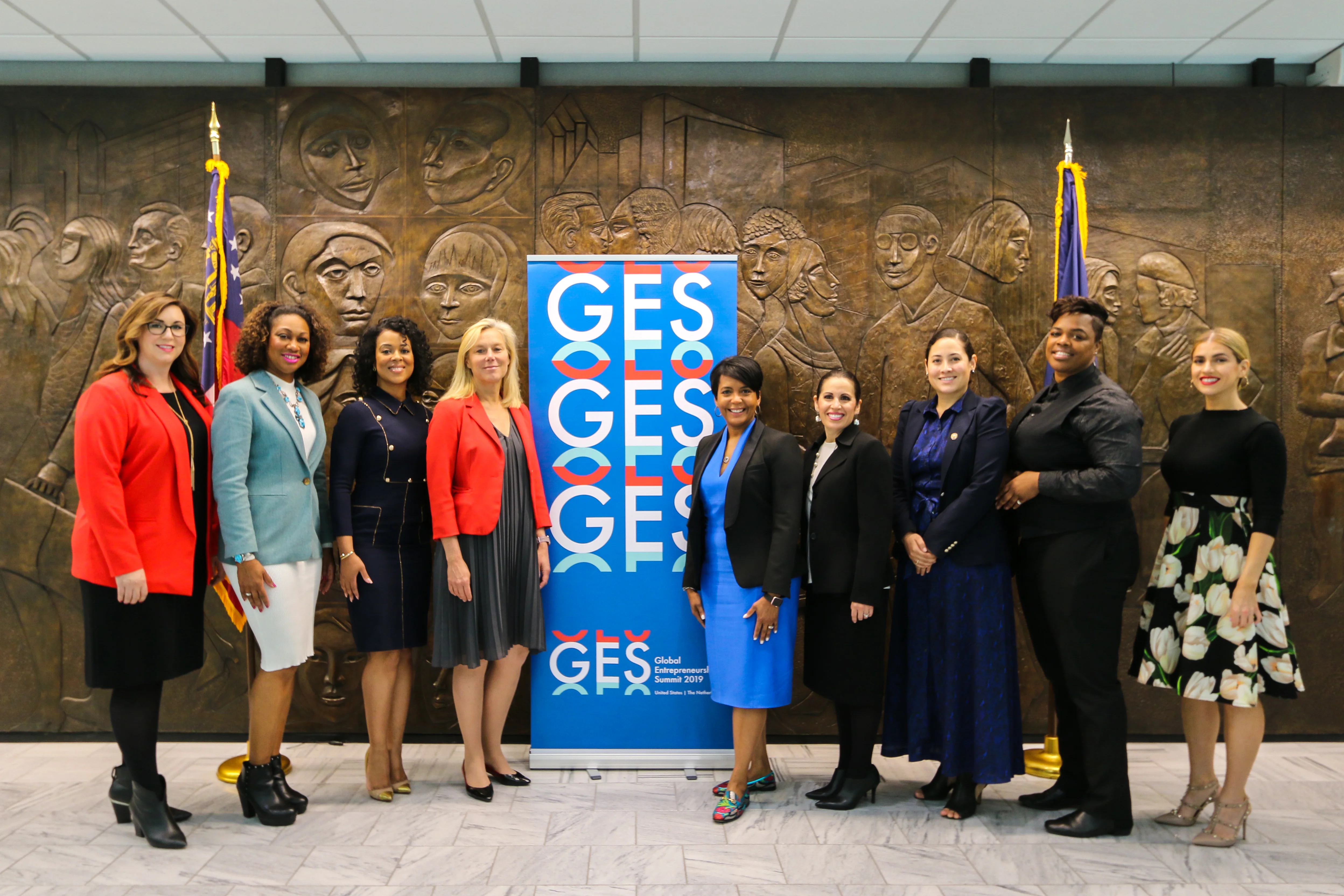
Bottoms entered the 2026 election with an extensive political record.
She served on the Atlanta City Council before winning the city's 2017 mayoral election and taking office in January 2018.
Her handling of those issues became a significant part of the gubernatorial campaign.
Jackson and his supporters argued that Bottoms' record on crime and municipal leadership raised concerns about how she would govern the state. Bottoms and her supporters pointed to her executive experience and argued that she was prepared to address Georgia's broader economic and social challenges.
After leaving the mayor's office in 2022, Bottoms served in the Biden administration as a senior adviser and director of the White House Office of Public Engagement.
Her return to electoral politics in 2026 was therefore not the arrival of a political newcomer, but the continuation of a career spanning municipal government and federal public service.
The victory also represents a political comeback after a mayoral tenure that drew both praise and criticism.
The Atlanta Journal-Constitution reported that her campaign deliberately emphasized economic issues and the future of Georgia rather than making the historical significance of her candidacy its principal argument.
The campaign: Affordability, healthcare, and competing visions for Georgia
Although the historical significance of Bottoms' election has attracted national attention, Georgia voters were also choosing between two candidates with different approaches to government.
Issue | Keisha Lance Bottoms | Rick Jackson |
|---|---|---|
Healthcare | Supported expanding Medicaid eligibility | Supported conditional expansion without jeopardizing existing federal funding |
Taxes | Supported allowing local governments to reduce grocery sales taxes | Proposed major state income-tax reduction and property-tax restrictions |
Education | Emphasized school funding and broader prekindergarten access | Emphasized improving educational outcomes |
Data centers | Called for a pause on new development | Support local community approval requirements |
Public safety | Defended her experience while proposing state-level changes | Criticized Atlanta's crime record during her mayoral tenure |
Sources: Associated Press — Georgia governor election and The Atlanta Journal-Constitution — Candidates' competing visions.
The election unfolded against a national political backdrop shaped by President Trump's second term.
Jackson had aligned himself with Trump during the Republican primary, while Bottoms made opposition to the administration's policies part of her campaign.
Jackson later emphasized continuity with outgoing Republican Governor Brian Kemp, whose popularity and political positioning differed from Trump's in important respects.
Bottoms also campaigned with prominent Democrats, including former President Barack Obama and Senator Jon Ossoff.
The election's outcome does not establish that every voter supported every element of Bottoms' platform. It does, however, give her the mandate to assume the office and attempt to advance the policies on which she campaigned.
The end of an era in Georgia politics
Bottoms' election ends that uninterrupted period of Republican control of the office.
It also places Georgia within a broader national pattern in which statewide elections can produce different results depending on the candidates, issues, and political environment.
The state's political transformation has not been linear. Republicans continued to win gubernatorial elections even as Democrats achieved victories in presidential and Senate races. In 2026, Democrats also won other statewide offices, including lieutenant governor, secretary of state, and attorney general.
Bottoms' win adds another significant development to that changing landscape, but it does not establish that Georgia has permanently realigned toward either party.
The state remains politically competitive, and the incoming governor will have to work within a government whose other institutions are not necessarily controlled by her party.
What comes next for Governor-elect Bottoms?
Bottoms' election is historic, but her ability to enact her agenda will depend on far more than winning the governorship.
Georgia's governor has significant executive authority, but legislation and state spending also involve the General Assembly.
Several questions will help define the beginning of her administration.
- Healthcare: Can Bottoms secure the legislative support needed to expand Medicaid?
- Affordability: Which proposed tax and cost-of-living measures can move through the General Assembly?
- Education: How will the state fund expanded prekindergarten access and public school priorities?
- Reproductive rights: Can her administration change Georgia's restrictive abortion laws without sufficient legislative support?
- Economic development: How will the state balance investment, jobs, energy demand, and community concerns surrounding new data centers?
These issues will provide measurable tests of her administration's ability to turn campaign proposals into government action.
They also highlight a fundamental distinction between winning an election and governing: a historic victory creates the opportunity to exercise power, but it does not guarantee the passage of legislation.
A milestone that reaches beyond Georgia
The historical significance of Bottoms' election is not confined to party politics.
Her victory changes the record of who Americans have elected to lead their states.
For generations, Black women participated in American political life as organizers, educators, community leaders, voters, legislators, and candidates, even when the country's highest elected offices remained largely inaccessible to them.
Bottoms now enters a category of American political leadership in which no Black woman had previously been elected to serve.
That does not make her administration immune from criticism, nor does it mean that her election should be judged differently from those of other governors. Her policies, decisions, appointments, and governing record will remain subject to public scrutiny.
But the historical fact is independent of whether voters agree with her political positions.
On November 3, 2026, Georgia elected a Black woman as governor for the first time.
And in doing so, it became the first state in American history to elect a Black woman to that office.
The consequences of her administration remain to be seen. The place of her election in American history is already established.